Calling All Designers: We Are Looking for Examples of a New Bathroom Culture!
A Place of Sanctuary: The Bathroom as a Retreat
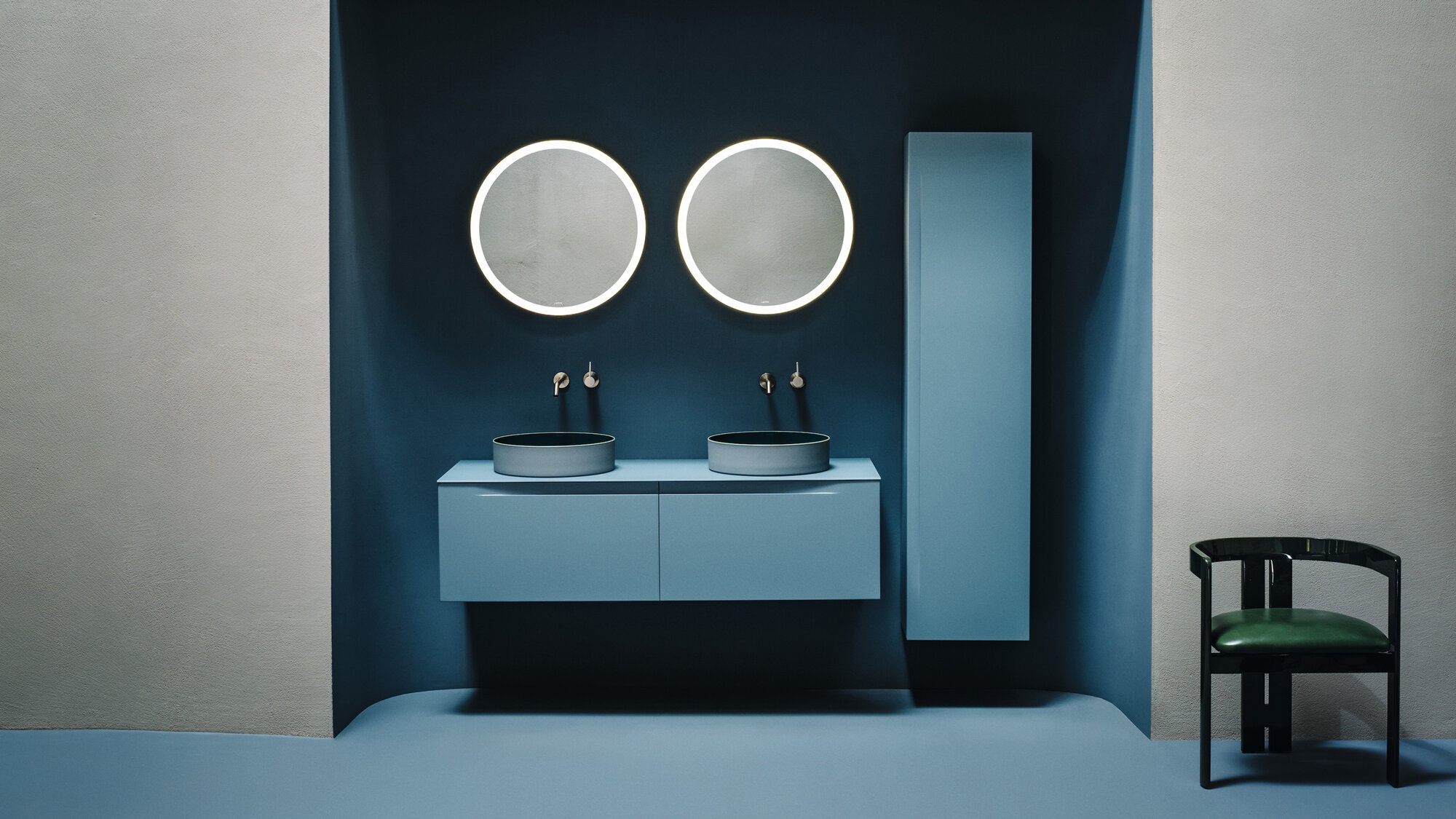
Between constant connectivity, accelerated routines and digital overload, the desire for spaces that provide relief and enable sensory experience is growing. Milan Design Week demonstrated that the bathroom is acquiring an increasingly new significance in design and planning: no longer merely a functional sanitary space, but a place where everyday routines transition into moments of calm and regeneration. Within a compact footprint, it becomes evident how strongly a new quality of space depends on the intelligent interplay of function, material and atmosphere.
This development affects all areas of planning. In multi-residential housing, the new bathroom proves itself through compact, durable and low-maintenance solutions. In high-end residential projects and contract environments, robust materials, carefully considered lighting and elements with intuitive usability stand out. In the luxury private bathroom, spa elements and bespoke details can be tailored to individual user preferences. Across all segments, expectations of the bathroom are changing significantly: it should remain functional while becoming more atmospheric, more intelligently usable and more durable.
With this shift in attitude, the focus of interior architects is also changing. They coordinate a complex interplay of layout, lighting, technology, material selection and comfort. The bathroom thus becomes a space in which design quality and functional intelligence are closely interwoven. For manufacturers, this development means designing taps, ceramics, furniture, shower solutions, surfaces and technical components so that they integrate naturally into a wide range of planning contexts. The interaction of water, light, surfaces and acoustics is perceived far more consciously than just a few years ago. Warm woods, mineral surfaces, refined metals and restrained compositions demonstrated how wellness and contemplation today emerge through materiality, light and spatial calm.
At the same time, manufacturers are facing increasing pressure. European regulations concerning CO₂ reduction, material transparency, reparability and recyclability are now directly influencing development, construction and production. In Milan, it became clear that the focus is no longer on short-term product novelties, but on long-term material and system solutions. Materials are no longer viewed merely as surfaces or decorative cladding, but as the starting point of the design process and an important parameter in sustainable product development.
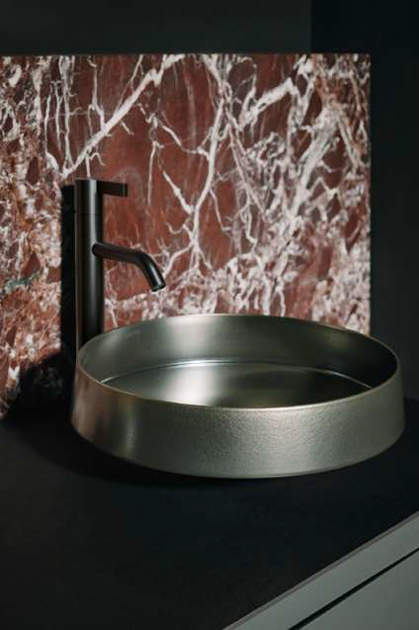
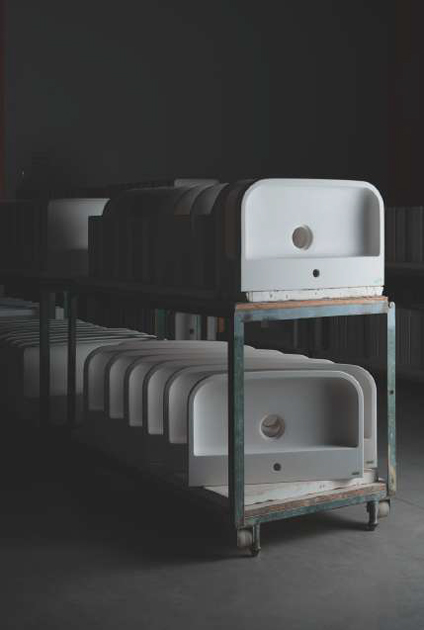
Manufacturers such as LAUFEN demonstrate how strongly innovation in the bathroom is now being conceived through the lens of material, use and production. With VITREON Steel, the brand expands its material universe with a material that combines the smooth appearance of ceramic surfaces with the strength of steel. Thinner wall profiles, high durability and reduced material consumption are changing not only aesthetics, but also the constructive possibilities within the bathroom. A different approach is offered by Konstantin Grcic with PAR, a new bathroom concept for LAUFEN that considers everyday routines, comfort and later stages of life together. The collection demonstrates how support, intuitive usability and restrained design can be combined without marking the bathroom as overtly technical or accessibility-oriented.
QuadroDesign is also among the manufacturers rethinking the bathroom through material and system thinking. Its consistent use of AISI316L stainless steel exemplifies a development in which material choice, circular thinking and construction converge. This is not simply about reducing product ranges, but about a formally and structurally reduced design language: modular systems, durable materials, repairable components and solutions designed for long-term use. For the Salone del Mobile, QuadroDesign commissioned Giacomo Moor to develop a modular exhibition stand that, after the fair, is intended to be dismantled and rebuilt in Masala, Zambia, as a public sanitary structure. The temporary exhibition architecture is thereby given a second life, extending the concept of sustainability from the product itself to construction and exhibition architecture.
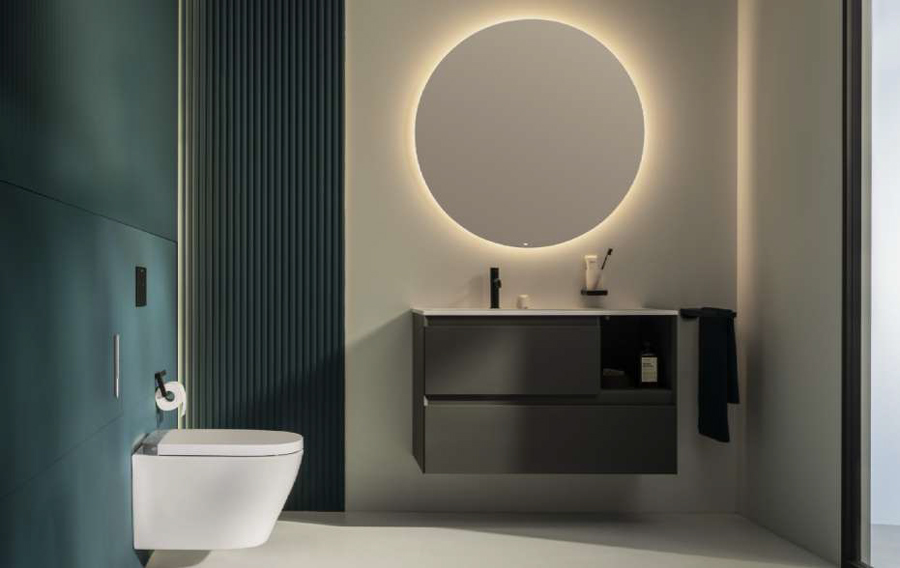
Many of the most relevant presentations deliberately avoid a conventional sustainability aesthetic or demonstrative eco-codes. Instead, the focus lies on precise construction, reduced production complexity and energy-efficient processes. Sustainability thus becomes an infrastructural foundation of the design process — not a decorative statement, but something embedded within the product, the material and the system itself.
The role of technology in the bathroom is also changing. Systems for water optimisation, hygiene and energy efficiency are no longer presented as technical features, but understood as an integral and natural part of the space. Technology disappears into the object and becomes part of a calm, almost invisible architecture of comfort. With In-Wash Vorea, Roca demonstrates this integration of smart toilet technology into a restrained, classical form. Asian markets in particular shaped this development early on. There, the bathroom has long been established as a technologically integrated space of comfort and wellness. In Europe, this technological precision is now increasingly merging with a pronounced culture of materiality and architecture.